mn
mn  ru
ru 
The Return of DPC in Dota 2: Why the Old Format Outshines the Current System
The Dota 2 season is currently boiling with activity: less than a week remains before the start of PGL Wallachia S5, and there are just under three months left until the most anticipated event in esports — The International 2025. By the way, the tournament will be available for free predictions via Pick’em MelBet, but that’s not the focus right now. More and more often, the Dota 2 community is bringing up the topic of the Dota Pro Circuit (DPC): why did Valve abandon this system, why was it so valued, and is the current format really worse? In this review, I’ll break down in detail how the DPC used to work, what Dota 2 is missing without the Pro Circuit, why so many pro players and fans are calling for the return of the old seasonal structure, and what a renewed DPC 2.0 could look like — with concrete suggestions for Valve and the community!
DPC in Dota 2: What It Was Like
When Valve announced the Dota Pro Circuit (DPC) in 2017, the Dota 2 esports scene received, for the first time, a truly transparent and understandable qualification system for The International. The essence of the DPC was that the world’s best teams earned points at Majors and in regional leagues — North America, South America, China, Southeast Asia, Eastern Europe, and Western Europe. These points directly determined the list of teams invited to TI. For players and fans, it was a breath of fresh air: the “invite lottery” disappeared, a clear tournament calendar appeared, and young teams from every region had a real chance to reach the year’s main tournament — The International.

DPC became the foundation of professional Dota 2, where each season was structured, and the top 12 teams in the world were determined not by Valve’s behind-the-scenes decisions, but by competition on the server.
However, in September 2023, Valve unexpectedly announced the end of the DPC era, explaining it as a desire to “support local, independent tournaments” and give the community more freedom. The official reasoning was that the DPC had become “too bloated” and was holding back the growth of the scene, while tournament organizers found it unprofitable to host championships outside of the DPC system.
The community responded with mixed reactions: some supported the idea of bringing back diverse formats, while others — especially professional players and team managers — still believe that the removal of the DPC deprived Dota 2 of stability, transparency, and the very structure that had made Dota esports unique for years.
Dota 2 Without DPC: What We Have Now
After the cancellation of the DPC, the Dota 2 scene fell into complete chaos. The new Dota 2 tournament system is all about invites, with no Dota DPC points and no transparent qualification system for The International. Instead of fair DPC qualifiers, everything is now decided by tournament organizers, and regular regional leagues and a stable schedule have been completely forgotten. Many players and fans believe that after the cancellation of the DPC, Dota 2 lost its structure, while the chaos and issues within the pro scene continue to grow.
What we got after the cancellation of the DPC:
1. Most tournaments are now held by invitation, with no open qualifiers and no fair competition for slots.
2. There is no unified coordination of the schedule — tournaments often overlap or leave large gaps in the calendar.
3. Teams are now entirely dependent on the loyalty of organizers, not on their actual seasonal performance.
4. Semi-professional and young rosters have almost lost their chance to break into the big stage without a points system and rotation.
The chaos in Dota 2 after the cancellation of the DPC is no longer a temporary issue — it’s the new reality. Without the Dota 2 DPC system, the tournament scene has become less interesting for viewers, and new talent appears less and less frequently at major championships. The community is increasingly recalling how the DPC made Dota 2 esports truly exciting.
Arguments for Bringing Back the DPC in Dota 2 for 2025
Now, in 2025, Dota 2 fans and professional esports players are increasingly discussing the return of the DPC. DPC tournaments not only provided structure to the season, but also ensured a transparent qualification system for The International through DPC points and the ranking table. The DPC system in Dota 2 made esports more understandable, fair, and exciting for everyone involved in the scene.
Main arguments for bringing back the DPC:
- Even small DPC tournaments mattered — every DPC point influenced qualification for The International.
- The DPC gave tier-2 and tier-3 teams a chance to reach the global stage through regional leagues and DPC qualifiers.
- Thanks to the DPC Dota 2 system, fans were interested in following the DPC standings, making predictions, and calculating teams’ chances.
- The DPC allowed Valve to control the calendar and pace of tournaments, preventing chaos in the Dota 2 scene.
Now, without the DPC, it’s hard for young teams to break through, and interest in Dota 2 tournaments is declining. DPC tournaments made the season dynamic and the competition fair. The community is confident: the return of the DPC will bring order and excitement back to the Dota 2 scene.

The Numbers Speak for Themselves
It’s not just nostalgia and talk about the DPC that prove the old system was important for Dota 2. DPC statistics and viewer numbers speak for themselves: the popularity of DPC tournaments was consistently high, and Dota Majors regularly attracted record-breaking viewership.
The average audience for DPC tournaments was around 80,000 viewers, while the finals of Dota 2 Majors drew up to 262,000 fans watching at the same time. This is significantly higher than the numbers of most current Dota 2 tournaments in 2025. The data clearly shows: DPC had its own loyal and engaged audience, and the popularity of the DPC only highlights what the scene is missing today.
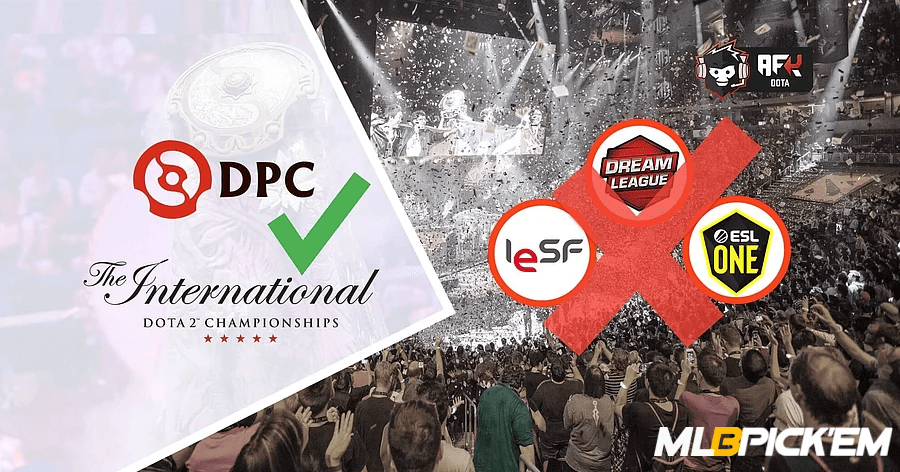
What Could DPC 2.0 Look Like?
If Valve actually decided to bring back an updated DPC in Dota 2, such a season could become the most exciting in the history of esports. The new DPC format currently being discussed by the entire community is not just a repetition of the past, but an attempt to collect the best ideas from all leagues around the world and add real competition and drama. Here’s what an updated DPC Dota 2 could look like:
- A DPC division expanded to include the top 10 strongest teams — maximum intensity of competition and a chance for young talents to break into the scene.
- Merging Dota 2 regions, for example, North and South America or China with Southeast Asia, would turn each DPC league into an arena of real derbies and unexpected upsets.
- DPC tournament matches only from Thursday to Sunday — the perfect rhythm for viewers, so esports doesn’t turn into an endless marathon.
- More flexibility for tournaments, but with a clear seasonal structure and a DPC points system, so that every match truly matters.
- A perfect balance between schedule stability and entertainment value, so that the Dota 2 league in 2026 once again becomes the most anticipated tournament series in esports.
Such an updated DPC would give new meaning to every match, reignite fans’ interest in a long season, and give even unknown teams a chance to write their own story. DPC 2.0 is exactly what the Dota 2 community — tired of the chaos of recent years — is waiting for.
Conclusion: Dota 2 Needs More Than Just Show Tournaments — It Needs a System
The Dota 2 DPC system was not perfect, but it was the foundation for the future of esports in Dota 2. Now we see chaos instead of structure: invites, random brackets, lack of clear rules — and all of this raises the question of what awaits Dota 2 after TI. Bringing back structure, even in the form of an updated DPC, is not about returning to the past, but about a real chance to build a new future for the scene. Now is the time to have a serious conversation about it!
Read also: