mn
mn  ru
ru 
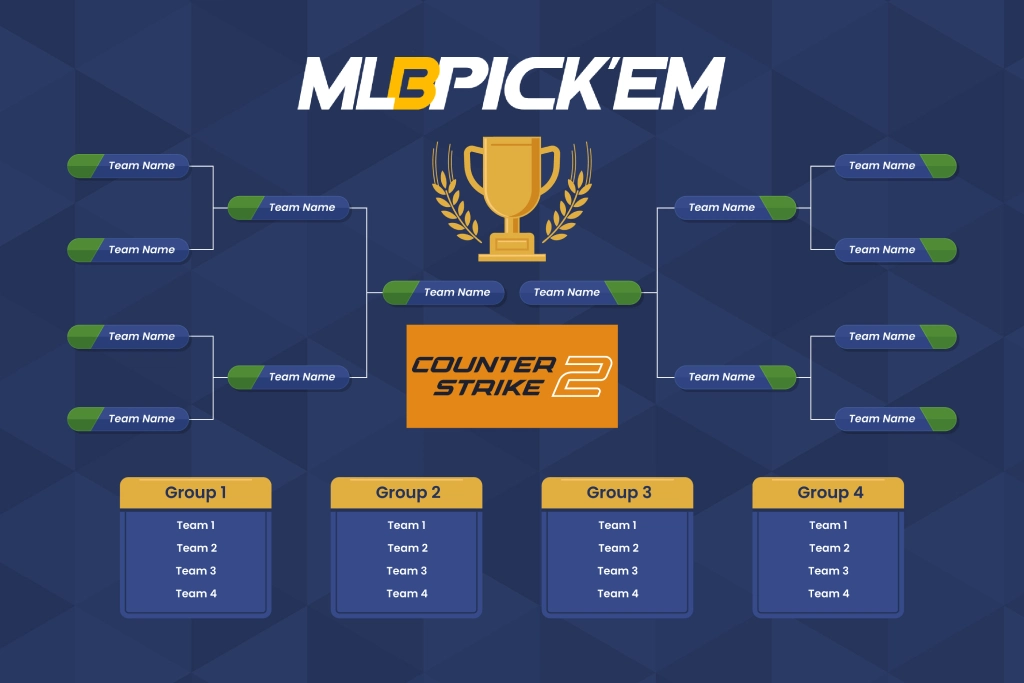
Complete Guide to Match and Tournament Formats in CS2
If you have ever followed professional esports tournaments, not necessarily from the world of Counter-Strike, you have probably come across terms like BO3, BO5, Swiss System, Single Elimination, and many others. These formats can confuse even experienced viewers and raise a lot of questions. In this guide, I will explain all the formats and terms in detail so that you can easily understand how any tournament in CS2 works!
Match Formats (BO1, BO3, and others)
The first thing we’ll do is break down the match formats used in CS2. There aren’t that many, so we’ll also touch on some other terms that are often used within these formats.
What Does “Best Of” Mean?
In the world of esports, terms like BO1, BO3, BO5, and BO7 might seem confusing at first, but it’s actually quite simple. These abbreviations describe how many maps a team needs to win in order to win the match. Let’s break down what each of these formats means:
- BO1 (Best of 1) — This is when a match consists of just one map. The winner is the team that wins that single map. It’s a simple, but sometimes very intense format where everything depends on one moment.
- BO3 (Best of 3) — A match made up of three maps. The winner is the team that first wins two rounds. So, the maximum number of maps in this format is three.
- BO5 (Best of 5) — A match where teams play to three victories. The winner is the team that wins three maps first. In this format, up to five maps can be played.
- BO7 (Best of 7) — This format requires a team to win four maps. It’s used less frequently, but it appears in some major finals or deciding matches.
Application in Tournaments
Now, let’s discuss where and when each of these match formats is used. Depending on the stage of a CS2 tournament, the format changes, and each one influences how the match will unfold. Here’s how it works:
- BO1 — is often used in the group stages, for example, in the Swiss System. It’s a quick way to identify the strongest teams, where one mistake and you’re out. Examples include PGL Major and BLAST.tv Austin Major 2025.
- BO3 — is used for more serious stages of the tournament, like the playoffs. Teams already know each other well, and every mistake can cost the match, but there’s always a chance to bounce back. For example, IEM Cologne 2025 will use BO3 in nearly all stages.
- BO5 — this is where the real battle begins! In the Grand Final of the tournament, everything is at stake, and victory goes to the team that wins 3 maps first. Example: IEM Katowice 2025, where every mistake can cost the championship.
- BO7 — a rarer format, used in decisive matches, like finals or championship deciders. To win, a team needs to win 4 maps. This format tests the teams’ endurance and strategy.
Each format is chosen based on the stage and level of the CS2 tournament, the teams’ skill level, and how quickly the organizers want to determine the winner. The further a team progresses in the tournament, the more chances they have to show their true strength and strategic mastery!
Map Pick/Ban (Map Veto)
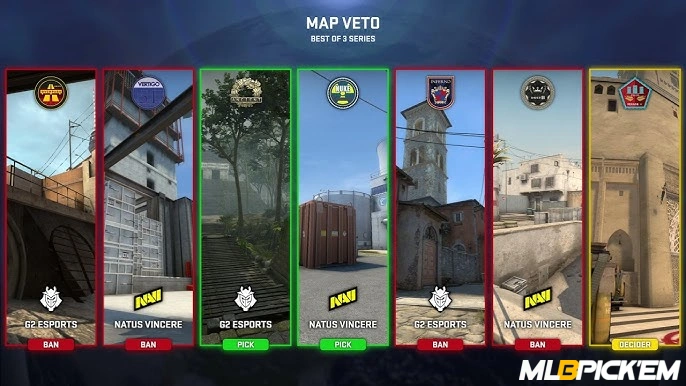
Now, let’s break down how maps are chosen in BO-formats. Here comes the term Map Veto. This is the process in which teams take turns banning and picking maps they will play on. In other words, before the match even starts, teams are already battling for the map. Each team can exclude maps they don’t want to play on and choose the ones they feel most comfortable with.
But besides that, there are a few more terms you should definitely know to understand how it all works:
Picks and Bans — the phase where teams not only choose their own maps but also try to ban the opponent’s strongest maps.
Tie-breaker — An additional game or criteria used to resolve a tie (for example, if the match ends in a tie after a BO3).
Overtime — extra time added to the game in case of a tie after the main time, often used in BO3 or BO5 formats.
Sometimes, the outcome of the entire tournament can depend on Map Veto. There are CS2 teams that perform poorly on one map but excel on all the others. And if, during Map Veto, that map accidentally gets picked — their chances of winning drop significantly. So, map selection isn’t just part of the preparation, it’s often a battle for every chance at victory!
CS2 Tournament Formats
In addition to the CS2 match formats I’ve already discussed, there are also tournament formats, and here things get a bit more complicated. But I’ll try to explain everything as simply as possible so you can understand how it works.
GSL Groups
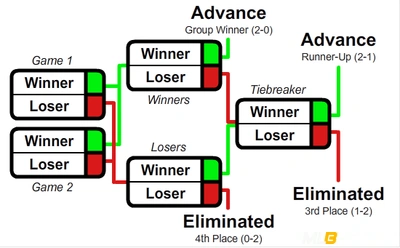
GSL (Global StarCraft II League) is one of the most popular tournament formats, used not only in StarCraft II but also in many other esports games, including CS2. In this format, 4 teams compete against each other in a round-robin system. Here’s how it works:
- All 4 teams are divided into two groups of 2 teams each. Each team plays against the other team in its group.
- The top two teams advance to the playoffs.
- The losing teams, despite their defeats, remain in the tournament but play in additional matches.
GSL format in CS2 is just one of the tournament formats, and its main advantage is in the dynamics and quick decisions.
Swiss System
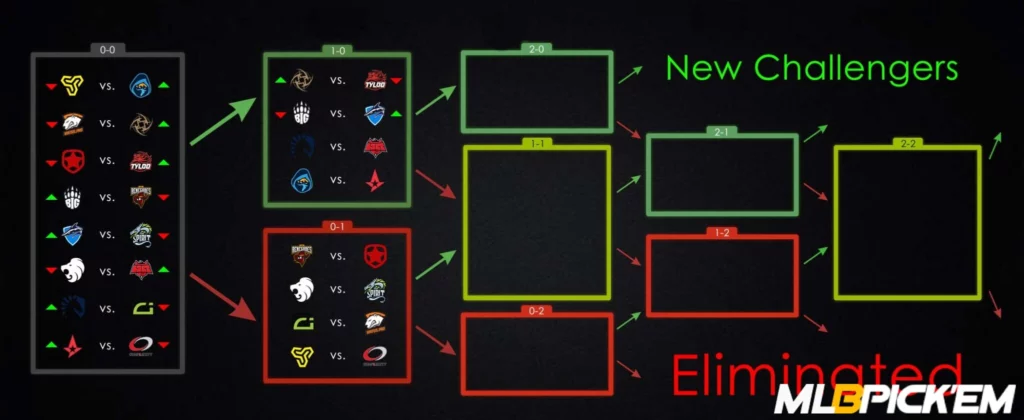
The Swiss System is a format commonly used in major tournaments like CS2. Unlike traditional group stages, where teams play against each other in a round-robin format, in the Swiss System, CS2 teams are paired based on their results. Each team plays several matches, and the higher their success, the tougher their opponents become. Here’s how it works:
- Each team plays a set number of matches (usually 5-7).
- To advance to the next stage, a team needs to win 3 matches.
- Teams that lose 3 matches are eliminated from the tournament.
This adds an element of unpredictability: a team may lose a match, but they always have the chance to come back and push forward if they win the following matches.
Bracket Formats
In addition to group systems, CS2 tournaments often use bracket formats, where every loss leads to elimination. These formats add excitement and increase the intensity of the competition.
Single Elimination (Knockout)
Lost — you’re out. This format is simple but very harsh. Every loss means the end of the tournament for a team. Fast, but unforgiving.
Double Elimination
This one isn’t as harsh: in this format, you can lose once and still stay in the game. After losing, a team moves to the lower bracket, where they still have a chance to fight for victory. Losing a second time — you’re out.
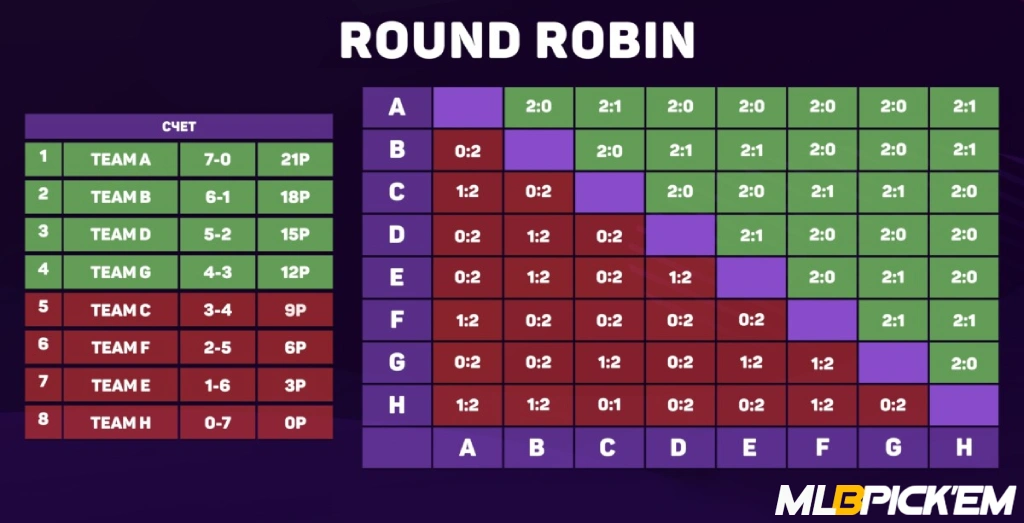
Round-Robin
And the last format is Round Robin. In this format, everyone plays against everyone. Each team faces every other team, which helps identify the strongest in more balanced conditions. Every match is important, as each team has the chance to win against any other team.
Combined Structures
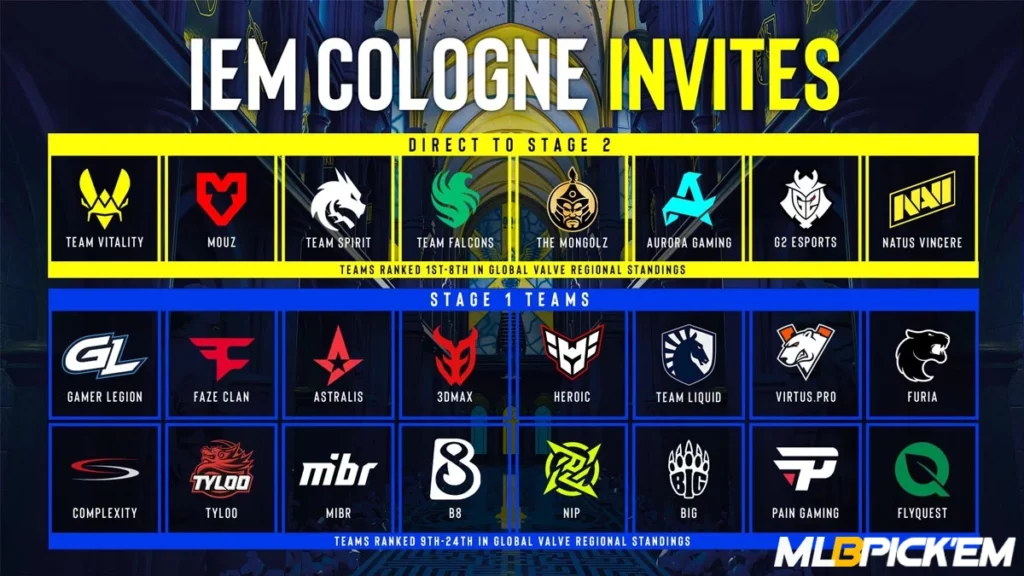
When tournaments combine several formats, such as groups + playoffs, a unique structure is created that tests teams at different stages. This allows for more varied match stages and makes the tournament more interesting and dynamic. Let’s take a look at an example of a combined structure for a major tournament, IEM Cologne 2025, which will soon begin and will be available for free predictions on MelBet Pick’em.
| Stage | Dates | Format |
|---|---|---|
| Play-In | 23-25 July 2025 | Double-Elimination bracket All matches are BO3 Top eight teams advance to Group Stage |
| Group Stage | 26-30 July 2025 | Two Double-Elimination (GSL) groups 8 teams per group All matches are BO3 Top-3 teams from each group advance to Playoffs |
| Playoffs | 1-3 August 2025 | Single-Elimination bracket Quarterfinals & Semifinals are BO3 Grand Final is BO5 |
This tournament structure combines different formats, starting with the flexibility of GSL groups and ending with the intense Single-Elimination in the playoffs. This creates an exciting dynamic — in the group stages, teams can “warm up,” while in the playoffs, every mistake can be decisive!
Understanding Formats – Key to Better CS2 Viewing
And here we are at the conclusion. Now that you know what BO1, BO3, and BO5 are, it will be easy for you to follow any CS2 tournament. By understanding the formats of matches and tournaments, you’ll be able to grasp how and why each result unfolds the way it does.
Don’t forget to read the tournament brackets — this is the key to understanding who plays whom, how teams progress through the stages, and what influences their success. Knowing these details will make watching matches not just interesting, but a true dive into the strategy and dynamics of each tournament!
Read also: